Why Is My Car A/C Blowing Warm Air? 7 Common Causes
You turn on your car’s A/C expecting a blast of cold air, but instead you get warm—or barely cool—air coming through the vents. What’s going on?
If your car A/C is blowing warm air , there are several possible causes. Your vehicle may be low on refrigerant because of a leak, an electrical component may have failed, the A/C compressor may not be operating properly, or there may be another issue preventing the system from cooling as it should.
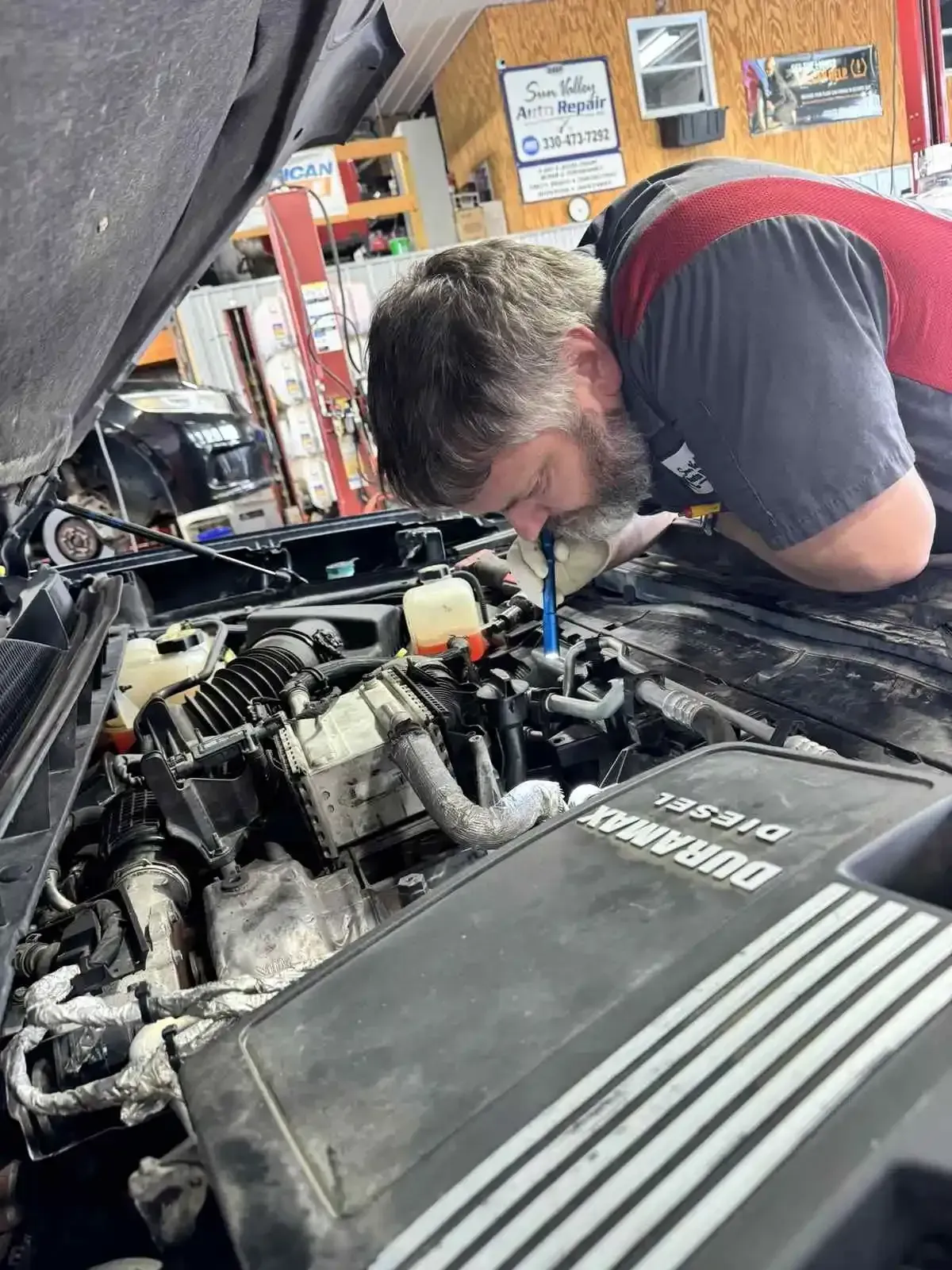
At Sun Valley Auto Repair in Sugarcreek, Ohio, we diagnose A/C concerns to determine why the system isn’t cooling properly rather than assuming it simply needs more refrigerant.
Here are seven common reasons your car’s air conditioning may be blowing warm air.
1. Your A/C System Is Low on Refrigerant
One of the first things people think when their car A/C stops blowing cold is:
“Does my car just need more refrigerant?”
It might—but there’s an important question to answer:
Why is the refrigerant low?
Your vehicle’s A/C system is designed as a sealed system. If the refrigerant level is low, there may be a leak somewhere in the system.
Possible leak locations include:
- A/C hoses and lines
- Condenser
- Compressor
- Evaporator
- Seals and O-rings
- Service ports
Simply adding refrigerant may temporarily make the air cold again, but if there’s a leak, the refrigerant can escape and the problem can return.
That’s why finding the cause of refrigerant loss is an important part of properly diagnosing an A/C problem .
2. Your A/C System Has a Refrigerant Leak
Sometimes an A/C leak is obvious. Other times, it can be very small and difficult to locate.
Depending on the vehicle and the concern, diagnosing an A/C leak may involve inspecting components and connections, checking system pressures, and using appropriate leak-detection methods.
A leak could develop from:
- Aging seals or O-rings
- Corrosion
- A damaged A/C line
- A leaking condenser
- Compressor-related problems
- Damage from road debris
The location and severity of the leak will determine what repair is needed.
If your A/C gets cold after being serviced but gradually starts blowing warm again, refrigerant loss is one possible reason.
3. The A/C Compressor Isn’t Working Properly
The compressor is a major component of your vehicle’s air-conditioning system. It helps circulate refrigerant through the system so heat can be removed from the passenger compartment.
If the compressor isn’t operating properly, the A/C may not be able to produce cold air.
A compressor concern doesn’t automatically mean the compressor itself needs replaced, though.
The reason it isn’t operating could involve:
- An electrical problem
- Low refrigerant
- A sensor or pressure-related issue
- Wiring
- A relay or fuse
- Compressor clutch concerns on applicable vehicles
- An internal compressor failure
This is another reason proper testing matters. Replacing an expensive component without first determining why it isn’t operating can lead to an unnecessary repair.
4. The A/C Condenser Is Damaged or Restricted
Your vehicle’s A/C condenser is typically located toward the front of the vehicle, where airflow can pass through it.
Because of its location, the condenser can be exposed to dirt, debris, corrosion, and physical damage.
If the condenser is leaking or unable to properly transfer heat, A/C performance can suffer.
A technician can inspect the condenser for visible damage, signs of leakage, and other concerns while diagnosing an A/C problem.
5. There’s an Electrical Problem
Modern automotive A/C systems rely on numerous electrical components.
Depending on the vehicle, the system may use:
- Fuses
- Relays
- Pressure sensors
- Temperature sensors
- Control modules
- Wiring
- Cooling fans
- Electronic compressor controls
A failure in one part of the system can prevent the A/C from operating normally even when the refrigerant level itself isn’t the problem.
This is why “my A/C isn’t cold” doesn’t always have a simple one-part answer.
6. A Cooling Fan Isn’t Working Properly
Cooling fans help move air across the condenser, particularly when the vehicle is stopped or moving slowly.
A fan problem may cause an interesting symptom:
Your A/C may feel colder while you’re driving but start blowing warmer when you’re sitting at a stoplight or idling.
There are several possible reasons for that symptom, so it shouldn’t automatically be assumed that the cooling fan is at fault. However, fan operation is one of the things that may need to be checked during diagnosis.
If you’ve noticed that your A/C temperature changes depending on whether you’re moving or sitting still, tell your technician. That information can be helpful when diagnosing the problem.
7. The Problem May Be Inside the HVAC System
Sometimes the A/C system may be producing cold air, but the HVAC system isn’t directing or controlling that air correctly.
Depending on the vehicle, problems with components such as blend doors, actuators, temperature controls, or other HVAC components can affect the temperature coming from the vents.
You might notice:
- Cold air from one vent and warm air from another
- One side of the vehicle is colder than the other
- The temperature doesn’t change when you adjust the controls
- Clicking or tapping noises from behind the dash
- Airflow isn’t coming from the selected vents
These symptoms can point the diagnostic process in a different direction than simply checking the refrigerant.
Why Does My Car A/C Blow Cold While Driving but Warm While Idling?
This is a common A/C question.
If your air conditioning gets colder while you’re driving but becomes warmer when you stop, there could be an airflow, cooling fan, refrigerant, pressure, or other system-related concern.
The vehicle moving down the road naturally creates airflow across the condenser. When you’re sitting still, the vehicle relies more heavily on its cooling fans to provide that airflow.
However, several conditions can cause similar symptoms, so the cooling fan shouldn’t be replaced based on this symptom alone.
Why Does My Car A/C Start Cold and Then Turn Warm?
If your A/C initially blows cold but becomes warm after you’ve been driving, the timing of the problem can provide useful diagnostic information.
Possible causes can involve refrigerant pressures, compressor operation, electrical components, sensors, icing, or other HVAC system problems.
Pay attention to when the air becomes warm and whether turning the vehicle or A/C off temporarily changes the symptom.
Those details can help your technician reproduce and diagnose the concern.
Does My Car A/C Just Need to Be Recharged?
Maybe—but an A/C “recharge” isn’t necessarily the complete solution.
If the system is low on refrigerant, the important question is where the refrigerant went .
Adding refrigerant without addressing a leak may result in the system becoming low again.
When we evaluate an A/C concern, our goal is to gather enough information to determine what the system needs rather than assuming that adding refrigerant will solve every warm-air complaint.
Can I Recharge My Car A/C Myself?
You’ll find DIY refrigerant cans at many auto-parts stores, but adding refrigerant without knowing the system’s current charge and operating condition can make diagnosis more difficult and may not address the actual problem.
Automotive A/C systems are designed to operate with a specified amount and type of refrigerant. Newer vehicles may also use different refrigerants than older vehicles.
If your A/C isn’t cooling properly, having the system evaluated can help determine whether the problem is actually low refrigerant or something else.
How Do You Diagnose a Car A/C That Isn’t Blowing Cold?
The exact diagnostic process depends on the vehicle and symptoms.
A technician may need to evaluate things such as:
- Vent temperature
- Refrigerant pressures
- Compressor operation
- Cooling fan operation
- Visible A/C components
- Signs of refrigerant leakage
- Electrical operation
- Stored diagnostic trouble codes when applicable
- HVAC controls and actuators
The results of those checks help determine what should happen next.
At Sun Valley Auto Repair, we believe in testing before replacing parts . When possible, we also document what we find so you can better understand what’s happening with your vehicle and make an informed repair decision.
Should I Keep Driving If My A/C Is Blowing Warm Air?
An A/C system that isn’t cooling doesn’t necessarily mean the vehicle is unsafe to drive. However, the underlying cause still matters.
For example, a problem involving a shared electrical circuit, cooling fan, belt-driven component, or another related system could potentially affect more than passenger comfort.
And on extremely hot days, working air conditioning can be especially important when transporting children, older adults, pets, or anyone particularly vulnerable to heat.
If your A/C suddenly stops working or you notice other symptoms—such as overheating, unusual noises, warning lights, or a burning smell—have the vehicle inspected promptly.
Car A/C Repair in Sugarcreek, Ohio
If your car A/C is blowing warm air in Sugarcreek, Ohio , you don’t have to guess whether it needs refrigerant, a compressor, or something else.
Sun Valley Auto Repair can inspect and diagnose your vehicle’s air-conditioning system to determine why it isn’t cooling properly.
We serve drivers from Sugarcreek and surrounding communities, including Berlin, Walnut Creek, Dover, New Philadelphia, Millersburg, and throughout Holmes and Tuscarawas Counties.
Whether your A/C is completely warm, isn’t as cold as it used to be, works intermittently, or only gets cold while you’re driving, we’ll work to determine what’s causing the concern.
Driving Trust. Setting Standards.
Frequently Asked Questions About Car A/C Problems
Why is my car A/C blowing warm air?
Common causes include low refrigerant, a refrigerant leak, compressor problems, electrical issues, cooling fan problems, condenser damage, or a problem within the HVAC system. Testing the system is the best way to determine the actual cause.
Why did my car A/C suddenly stop blowing cold?
A sudden change could be caused by an electrical failure, compressor-related issue, refrigerant loss, sensor problem, cooling fan concern, or another A/C system fault. The symptoms and system testing can help narrow down the cause.
Does warm A/C mean I’m low on refrigerant?
Low refrigerant is one possibility, but it isn’t the only reason an A/C system may blow warm air. Electrical, compressor, fan, condenser, and HVAC-control problems can produce similar symptoms.
How do I know if my car A/C has a refrigerant leak?
One clue is an A/C system that gradually loses cooling performance or becomes warm again after refrigerant has been added. Proper leak detection is needed to determine whether a leak exists and where it is located.
Why is my A/C cold on one side and warm on the other?
Depending on the vehicle, uneven vent temperatures can be related to HVAC doors or actuators, controls, refrigerant level, sensors, or other system concerns. Diagnosis is needed to determine the cause.
Why does my A/C only work when I’m driving?
Airflow across the condenser changes when the vehicle is moving versus sitting still. Cooling fan operation is one possible cause, although refrigerant and other A/C system problems can create similar symptoms.
Is it normal for a car to need an A/C recharge every year?
A properly functioning A/C system shouldn’t simply be assumed to need refrigerant added every year. If the system repeatedly becomes low, it should be evaluated for a leak or another underlying problem.
Ready to give your engine the TLC it deserves? Schedule your next service appointment with Sun Valley Auto Repair today! We look forward to keeping your car happy and healthy for miles to come.
Stay Connected!
Like us on Facebook
Follow us on Instagram
Learn More About Us
Join Our Team
Subscribe to our YouTube Channel
Recent Posts